
A zero-generation immigrant is a sociological and community-driven term used to describe the absolute founding members of an immigrant family or diaspora in a new country. Unlike the “first generation,” which simply denotes foreign-born status, the “zero generation” specifically highlights those who arrived with zero social capital, zero local networks, and zero financial safety nets, acting as the “root” or “zero point” from which all future family generations grow .
Table of Contents
The Core Context: Why “Zero” and Not “First”?
In official government demographics (like the U.S. Census Bureau), the term “zero generation” does not exist. The government strictly uses “first generation” for foreign-born individuals.
However, in sociology, immigrant advocacy, and community storytelling, the term “zero generation” has emerged to capture a deeper, more emotional reality. While “first generation” is a legal and demographic label, “zero generation” is a narrative of origin. It honors the immense, often unseen sacrifices of the pioneers who started with absolutely nothing, establishing the “zero point” on the family’s timeline in the new country.
(Note: Do not confuse “zero generation” with “Generation Z,” which refers to the demographic cohort born between 1997 and 2012).
Key Characteristics of the Zero-Generation Immigrant
What separates the “zero generation” from standard first-generation immigrants? It comes down to the starting conditions and the psychological burden of being the pioneer.
The “Zero Capital” Starting Point
Zero generation immigrants typically arrive with no pre-existing community, no professional network, and often no recognized credentials. They are the ultimate self-starters. They don’t just adapt to a new culture; they build the foundational infrastructure (community centers, places of worship, local businesses) that later generations will benefit from.
The Burden of the “Trailblazer”
Because they are the “zero point,” they have no roadmap. First-generation immigrants who arrive later (after a community is established) can rely on existing diaspora networks for housing, jobs, and advice. The zero generation must invent the roadmap, facing a much higher rate of trial, error, and isolation.
Deep Cultural Preservation
Zero generation immigrants often act as the primary vaults for their home country’s culture, language, and traditions. Because they arrived before widespread globalization and digital connectivity made it easy to stay connected to the homeland, their cultural practices are often more deeply rooted and traditional than those of later arrivals.
Zero Generation vs. First Generation: What’s the Difference?
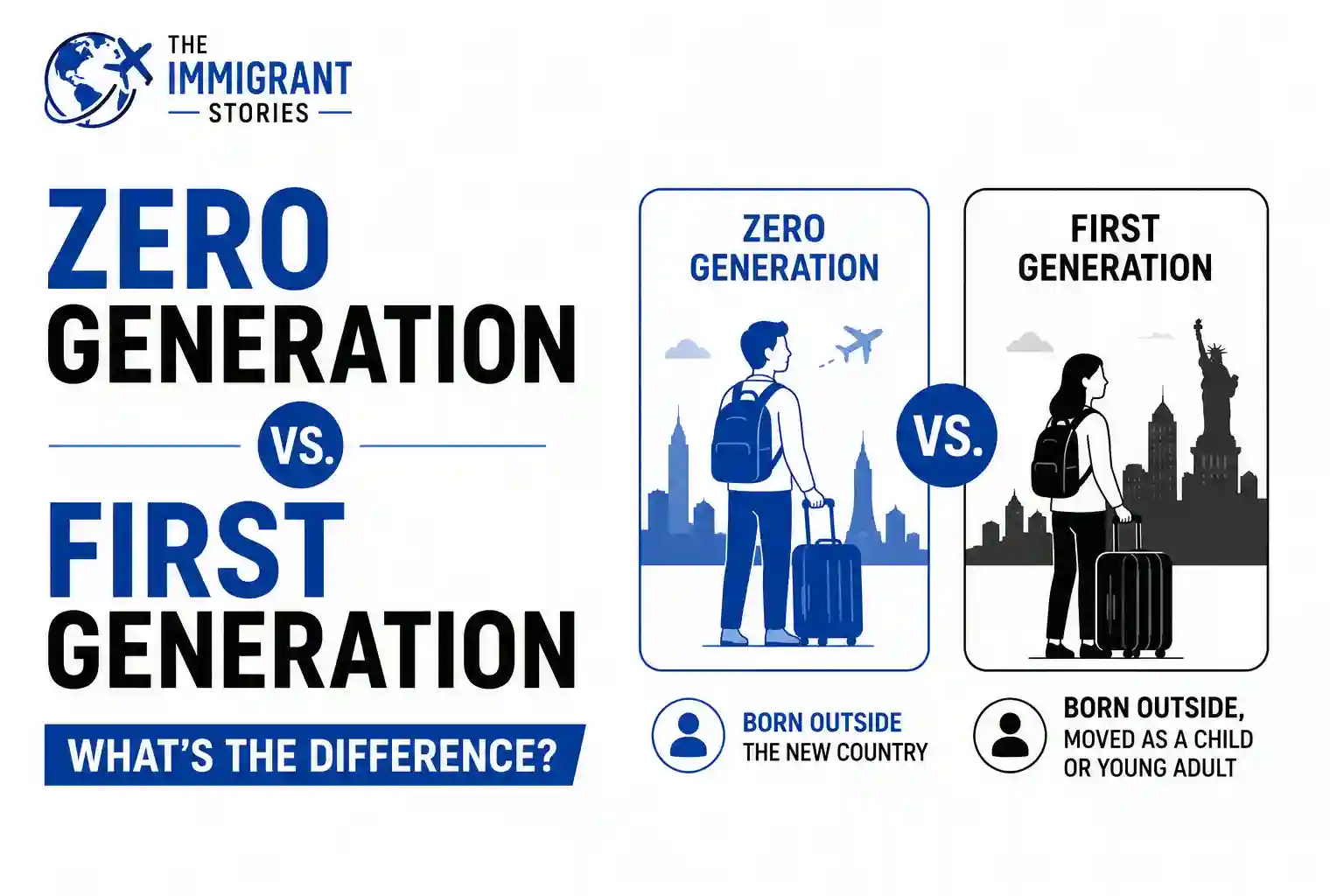
To clarify the terminology, here is how the “zero generation” fits into the broader immigrant family tree:
- Zero Generation: The absolute pioneers. Arrived with zero network/resources. They are the “roots” of the family tree in the new country. They bear the heaviest burden of cultural translation and foundational survival.
- First Generation: A broader demographic term for anyone born outside the host country. A first-generation immigrant arriving today might have a robust professional network, savings, and a pre-arranged job, meaning they don’t face the “zero capital” struggle of the zero generation.
- Second Generation: The children of the immigrants, born in the host country. They benefit directly from the foundation laid by the zero generation.
Frequently Asked Questions (FAQ)
Is “zero-generation” an official government classification?
No. Government bodies like the U.S. Census Bureau or the UK Home Office do not use this term. They strictly use “first generation” (foreign-born) and “second generation” (native-born with foreign parents). “Zero generation” is a sociological and community term.
Can a zero-generation immigrant be highly educated or wealthy upon arrival?
es. While the term often highlights those who arrived with “zero” resources, it can also apply to highly skilled professionals who arrive with zero local social capital or zero understanding of the host country’s cultural nuances, forcing them to start from “zero” in their professional lives.
How can I honor my zero-generation parents or grandparents?
The best way to honor them is to document their stories. Platforms like The Immigrant Stories encourage recording oral histories, preserving old photographs, and writing down their journey. Their “zero point” struggle is the foundation of your current success.