
A first-generation immigrant is an individual who was born in one country and has permanently relocated to another country, becoming a resident or citizen of the new nation. According to official demographic standards set by the U.S. Census Bureau and researchers like the Pew Research Center, the “first generation” specifically refers to foreign-born individuals who make the move, while their children born in the new country are classified as the “second generation”
The Official Definition and Why It Matters
In sociology, government policy, and demographic research, precise language is critical. The U.S. Census Bureau explicitly states that “the first generation is composed of individuals who are foreign-born“
This classification is not just a label; it is used by governments and research institutions to track immigration trends, measure economic integration, and shape public policy. Understanding this definition helps immigrants, researchers, and policymakers accurately discuss the unique challenges and contributions of those who make the initial leap to a new country.
First-Generation vs. Second-Generation: Clearing Up the Confusion
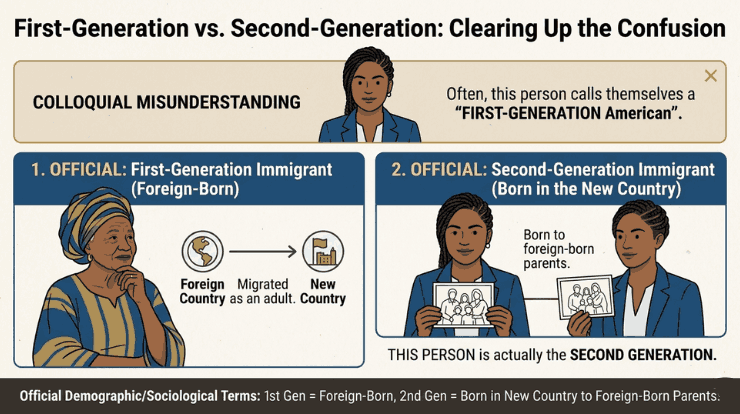
There is a very common colloquial misunderstanding about this term. Many people casually use “first-generation” to describe the first person in a family born in the new country (e.g., “I am a first-generation American”).
However, in official demographic and sociological terms, that person is actually the second generation. Here is the clear breakdown:
- First-Generation Immigrant: Foreign-born individuals who migrated to the new country.
- Second-Generation Immigrant: Individuals born in the new country to at least one foreign-born parent
Key Characteristics of First-Generation Immigrants
- Legal Navigation: They are the ones who directly navigate visa applications, permanent residency (green cards), or naturalization processes.
- Cultural Adaptation: They often experience “acculturation,” actively balancing their native heritage, language, and traditions with the norms of their new host country.
- Economic Impact: Studies consistently show that first-generation immigrants frequently start businesses at higher rates than native-born citizens and fill critical labor gaps in key industries.
💡 Pro Tip from Real Immigrants
“When filling out official census or demographic forms, always select ‘Foreign-Born’ if you were born outside the country, even if you are now a naturalized citizen. Your accurate response helps ensure the data that shapes future immigrant-friendly policies and community funding is correct.”
Frequently Asked Questions (FAQ)
Is a naturalized citizen still considered a first-generation immigrant?
Yes. Naturalized citizens who were born in another country are still classified as first-generation immigrants because their place of birth remains foreign. Citizenship status does not change the generational classification.
What is a “1.5 Generation” immigrant?
The “1.5 generation” is a recognized sociological term for individuals who immigrated to a new country as young children or adolescents. They share traits of both first-generation (born abroad) and second-generation (raised and educated primarily in the new country) immigrants.