
Navigating immigration systems means learning a new language of acronyms. Common global visa abbreviations include VOA (Visa on Arrival), eTA (Electronic Travel Authorization), and PR (Permanent Resident). Country-specific terms include the US H-1B (Specialty Occupation Worker), the UK BRP (Biometric Residence Permit), and Canada’s PGWP (Post-Graduation Work Permit).
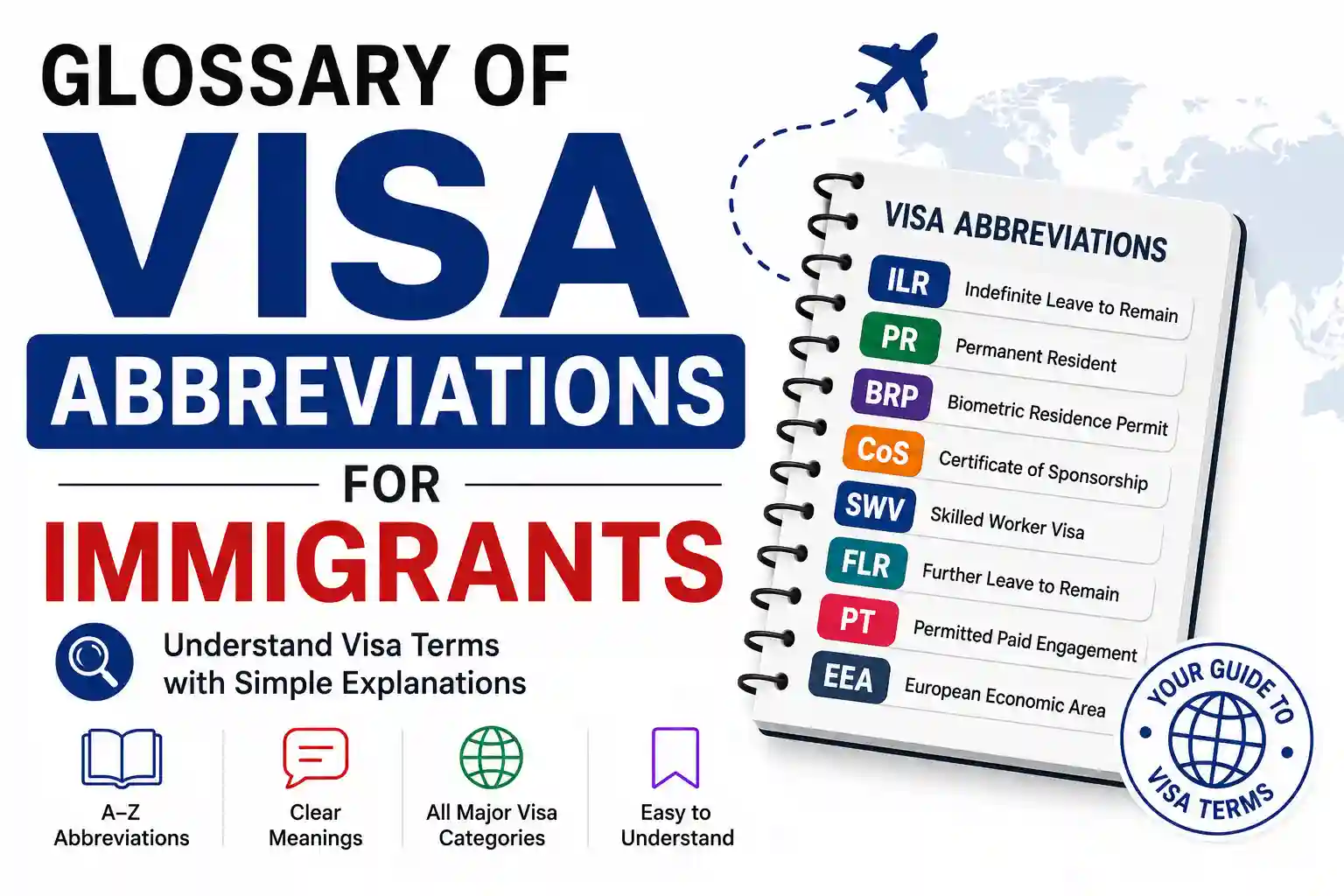
Understanding Visa Abbreviations for Immigrants
Immigration websites, legal documents, and job postings are filled with acronyms. Misunderstanding a single abbreviation (like confusing a TRV with a PR) can lead to costly application errors, denied boarding, or missed career opportunities. This guide decodes the most critical visa and immigration abbreviations to help you navigate your journey with confidence.
Global & General Visa Abbreviations for Immigrants
These terms are used across multiple countries and are essential for any global traveler or immigrant to know.
- VOA (Visa on Arrival): A visa granted at the port of entry (airport or border) rather than requiring advance application at an embassy.
- eVisa (Electronic Visa): A digital visa applied for and approved online, linked electronically to your passport number.
- eTA (Electronic Travel Authorization): A lightweight, pre-screening digital requirement for visa-exempt travelers (e.g., Canada eTA, US ESTA, UK ETA).
- PR (Permanent Resident): A non-citizen who has been granted the right to live and work in a country indefinitely.
- TRV (Temporary Resident Visa): A visa granting temporary entry for tourism, study, or short-term work.
- YMS (Youth Mobility Scheme): A working holiday visa program (common in the UK, Australia, and Canada) allowing young adults to live and work temporarily.
🇺🇸 United States Visa Abbreviations for Immigrants
The US immigration system is highly categorized. Here are the most critical acronyms for US-bound immigrants:
- USCIS: United States Citizenship and Immigration Services (the agency that processes most immigration benefits).
- DOS: Department of State (handles visa issuance at US embassies/consulates abroad).
- H-1B: Specialty Occupation Worker Visa (requires a bachelor’s degree or higher; subject to an annual lottery).
- L-1: Intracompany Transferee Visa (for managers, executives, or employees with specialized knowledge transferring to a US branch).
- O-1: Individuals with Extraordinary Ability or Achievement (often called the “genius visa”).
- F-1: Academic Student Visa.
- J-1: Exchange Visitor Visa (common for au pairs, researchers, and summer work travel).
- OPT (Optional Practical Training): Temporary employment permission for F-1 students related to their major area of study (up to 12 months, or 36 months for STEM degrees).
- CPT (Curricular Practical Training): Off-campus work authorization for F-1 students that is an integral part of their curriculum.
- EAD (Employment Authorization Document): Also known as a “work permit,” this card proves your legal right to work in the US while your primary visa or green card is processing.
- EB-1 / EB-2 / EB-3: Employment-Based Immigrant Visas (Green Cards), ranked by priority (EB-1 is highest priority for extraordinary ability, multinational managers, etc.).
🇬🇧 United Kingdom Visa Abbreviations for Immigrants
The UK uses specific terminology for its points-based immigration system:
- BRP (Biometric Residence Permit): A physical card proving your immigration status, rights, and permissions to stay in the UK (currently being phased out in favor of digital eVisas by 2025/2026).
- ILR (Indefinite Leave to Remain): The UK’s equivalent of Permanent Residency, granting the right to live and work without time restrictions.
- SW (Skilled Worker Visa): The primary work visa for individuals with a job offer from a UK employer holding a Sponsor Licence.
- Graduate Route (formerly PSW): Post-Study Work visa allowing international students to stay and work (or look for work) in the UK for 2 years (3 years for PhD graduates) after completing their degree.
- FLR (Further Leave to Remain): An application to extend your current visa before it expires (e.g., FLR(M) for spouse visa extensions).
- CoS (Certificate of Sponsorship): A unique reference number provided by a UK employer that you must include in your Skilled Worker visa application.
- IHS (Immigration Health Surcharge): A mandatory fee paid alongside your visa application to access the UK’s National Health Service (NHS).
🇨🇦 Canada Visa Abbreviations for Immigrants
Canada’s system is known for its streamlined digital processes and clear pathways to PR:
- IRCC: Immigration, Refugees and Citizenship Canada (the governing body).
- PGWP (Post-Graduation Work Permit): An open work permit for international students who have graduated from an eligible Canadian designated learning institution (DLI).
- LMIA (Labour Market Impact Assessment): A document a Canadian employer may need to obtain before hiring a foreign worker, proving no Canadian citizen or PR was available for the job.
- EE (Express Entry): Canada’s online application management system for three main economic immigration programs (Federal Skilled Worker, Federal Skilled Trades, and Canadian Experience Class).
- PNP (Provincial Nominee Program): Immigration programs run by individual Canadian provinces to nominate individuals who wish to immigrate to that specific province.
- SDS (Student Direct Stream): An expedited study permit processing program for residents of specific countries (like India, Philippines, Nigeria) who meet strict financial and academic criteria.
🇦🇺 Australia & 🇪🇺 Schengen/EU Abbreviations for Immigrants
- TSS (Temporary Skill Shortage Visa – Subclass 482): Australia’s primary employer-sponsored temporary work visa.
- GTE (Genuine Temporary Entrant): A requirement for Australian student visas proving you intend to stay in Australia temporarily (currently transitioning to the “Genuine Student” requirement).
- EU Blue Card: A work and residence permit for highly skilled non-EU citizens to work and live in any of the participating European Union countries.
- Type C Visa: The standard short-stay Schengen Visa (up to 90 days within 180 days).
- Type D Visa: A long-stay national visa for a specific Schengen country (e.g., for work or study exceeding 90 days).