
When people search for the “4 categories of immigrants,” they are usually looking for legal definitions or visa classifications. And while immigration law is complex, the reality is much simpler and far more profound: behind every visa category is a human heartbeat, a dream, and a unique journey.
At The Immigrant Stories, we know that an immigrant is not just a file number or a legal status. However, understanding the primary pathways people take to build a new life can help us better appreciate the diverse challenges and triumphs they face.
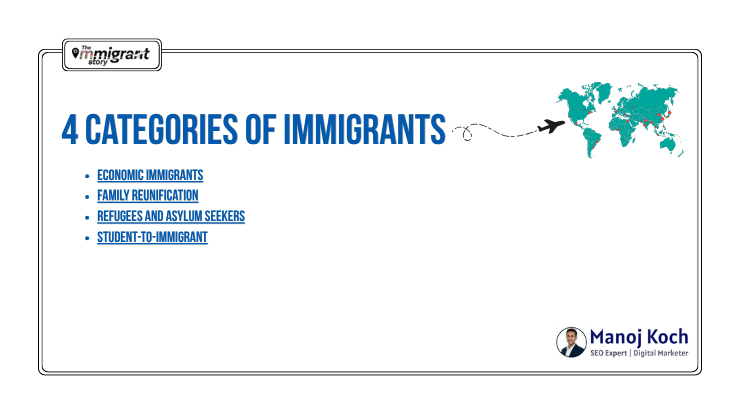
Globally, immigration systems generally classify newcomers into four main categories. Let’s explore what they are and the real human experiences behind each.
The 4 Categories of Immigrants Are:
1. Family-Based Immigrants (The Path of Reunification)
Love and family are the most powerful motivators for human migration. Family-based immigration allows citizens or permanent residents to sponsor their close relatives (such as spouses, children, parents, or siblings) to join them in a new country.
- The Human Reality: This pathway is often filled with emotional highs and bureaucratic lows. Imagine the joy of a spouse finally reuniting after years of long-distance, or the bittersweet moment a parent arrives to help raise grandchildren they’ve only known through video calls.
- Read a related story: Latest Immigrant Stories
2. Employment-Based Immigrants (The Path of Opportunity)
This category includes skilled workers, professionals, investors, and entrepreneurs who are sponsored by an employer or who possess extraordinary abilities that benefit the host country’s economy.
- The Human Reality: While it may sound like a straightforward “job transfer,” the reality is often an intense test of resilience. Many skilled immigrants face the heartbreaking challenge of “brain waste”—where a doctor or engineer from their home country must start over, drive a rideshare, or work entry-level jobs while their foreign credentials are evaluated. Their perseverance is nothing short of inspiring.
- Read a related story: Latest Immigrant Stories
3. Refugees and Asylum Seekers (The Path of Survival)
This humanitarian category is for individuals who are forced to flee their home countries due to a well-founded fear of persecution based on race, religion, nationality, political opinion, or membership in a particular social group, or due to severe conflict and violence.
- The Human Reality: Unlike other immigrants who plan their move for years, refugees and asylum seekers often leave with only what they can carry, seeking nothing more than safety. Their stories are profound testaments to human endurance, highlighting the incredible strength it takes to rebuild a life from zero after experiencing profound loss.
- Read a related story: Latest Immigrant Podcast
4. Diversity and Special Pathway Immigrants
This category encompasses a variety of unique routes. It includes winners of Diversity Visa (DV) lotteries (such as the US Green Card Lottery), individuals granted Special Immigrant status, and a growing demographic: international students who transition to permanent residency after graduating.
- The Human Reality: For many, this pathway begins with a student visa. Imagine the pressure of excelling in a foreign academic system, working part-time jobs to survive, and then navigating the high-stakes race to secure a work visa before graduation. It’s a journey of adaptability, late-night studying, and relentless ambition.
- Read a related story: Latest Immigrant Stories
You May also Like: [What Does Immigrant Mean? Beyond the Dictionary Definition]
Frequently Asked Questions (FAQs)
What are the main types of immigrants?
The four main categories of immigrants are family-based immigrants, employment-based (skilled) immigrants, refugees/asylum seekers (humanitarian), and diversity/special pathway immigrants (including transitioning students).
What is the difference between an immigrant and a refugee?
An immigrant chooses to relocate to another country for reasons like family, work, or education. A refugee is forced to flee their home country due to persecution, war, or violence and seeks international protection.
Can a student become a permanent immigrant?
Yes. Many international students transition into the employment-based immigrant category after graduation by securing employer sponsorship or applying through skilled migration pathways in their host country.
Why is it important to know the different immigrant categories?
Understanding these categories helps break down monolithic stereotypes. It highlights the diverse reasons people move and fosters empathy for the unique challenges each group faces during their relocation journey.